How to Know If Your Back Pain is Muscle Strain or a Slipped Disc?
Back pain is something almost everyone experiences at some point in life. It may start after lifting something heavy, sitting for long hours at work, or sometimes even after waking up in the morning. In many cases, the cause isn’t immediately clear.
One question many people struggle with is: Is this just a muscle strain, or could it be something more serious, like a slipped disc?
Let’s understand how muscle strain and slipped disc pain differ, and how you can recognize the signs.
What is a Muscle Strain?
A muscle strain in the back is essentially an injury to one or more of the muscles or tendons that support your spine. Think of it like overstretching a rubber band, sometimes the band snaps back fine, but sometimes it gets partially torn. When you strain a back muscle, tiny fibers within the muscle become stretched or torn, triggering inflammation and pain.
Common Causes of Back Muscle Strain
Back muscle strain often develops due to everyday activities such as:
- Lifting heavy objects incorrectly
- Sudden twisting movements
- Poor posture while sitting or working
- Overexertion during exercise
- Long hours of sitting without proper support
How Muscle Strain Pain Feels
The pain from a back muscle strain is usually localised to the area of injury. You might feel a sharp pain immediately after the injury, or a dull, aching pain that develops gradually. Muscle strain pain typically feels like a cramp and is often accompanied by muscle spasms. You might experience stiffness, reduced range of motion, and discomfort when bending, twisting, or lifting.
What is a Slipped Disc?
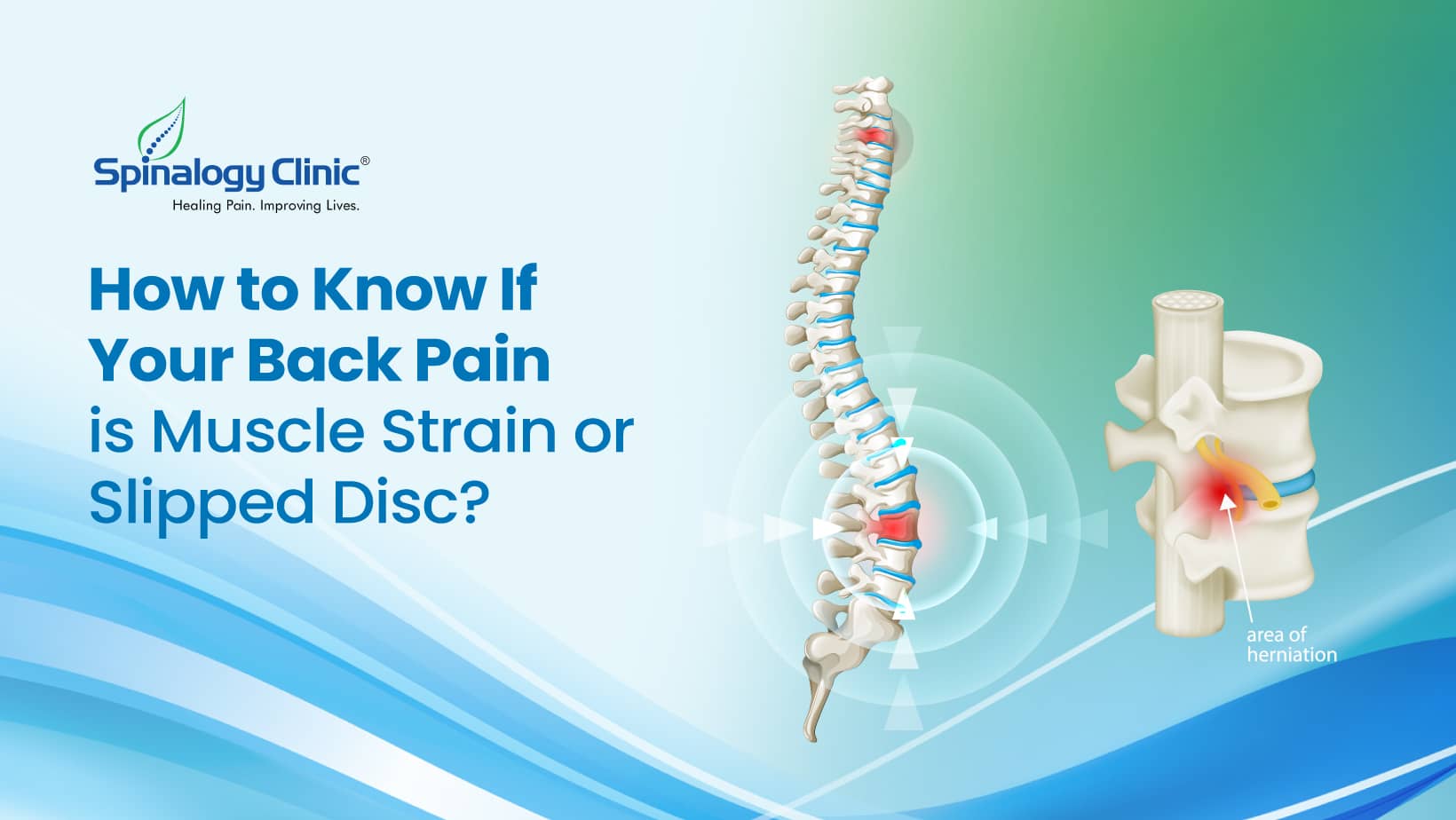
A slipped disc, more formally called a herniated or prolapsed disc, is a different kind of problem altogether. Your spine contains cushion-like structures between the vertebrae called intervertebral discs. These discs act like shock absorbers for your spine. Each disc has a tough outer layer and a softer inner core. When the outer layer weakens or cracks, the inner material can bulge out or leak into the surrounding space, potentially pressing on nearby nerves.
Common Causes of a Slipped Disc
A slipped disc can develop due to several factors, including:
- Age-related disc degeneration
- Repetitive strain on the spine
- Improper lifting techniques
- Sudden trauma or injury
- Long-term poor posture
How Slipped Disc Pain Feels
The pain from a slipped disc has different characteristics than muscle strain. While muscle strain pain stays localized, slipped disc pain often radiates down your legs, sometimes all the way to your foot. This radiating pain is called sciatica when it follows the sciatic nerve path. You might experience numbness or tingling in your legs or feet, weakness in the affected leg, or even difficulty controlling bowel or bladder function in severe cases. The pain might worsen when bending forward, sitting for extended periods, or during certain movements that put pressure on the affected disc, especially in the later slipped disc stages.
When You Should See a Back Specialist
Many people try to manage back pain at home, hoping it will go away with rest. While mild muscle strain can improve on its own, certain symptoms should never be ignored. Consult a back pain specialist in Pune if your pain persists beyond two weeks, if you experience radiating pain down your leg, if you have numbness or tingling in your legs or feet, if you experience weakness in your legs, if you have difficulty controlling bowel or bladder function, or if the pain is severe and limits your daily activities.
Early diagnosis is absolutely crucial. Waiting too long with a slipped disc, for example, can lead to permanent nerve damage.
Read-> Signs Your Back Pain Might Be An Emergency
Non-Surgical Treatment Options for Back Pain
At Spinalogy Clinic, our back specialist in Pune focuses on addressing the root cause of the problem while helping patients regain mobility and comfort.
Non-surgical back treatments may include:
- Physiotherapy and guided exercises
- Posture correction programs
- Pain management techniques
- Spinal strengthening therapies
- Lifestyle and ergonomic adjustments
These non-surgical treatments aim to reduce pressure on the spine, strengthen supporting muscles, and improve overall spinal health. With the right care plan, many patients recover successfully without undergoing surgery.
Seek Expert Back Pain Treatment in Pune
Back pain is incredibly common, but that doesn't mean you should simply accept it as a permanent part of your life. Whether your pain is from a muscle strain or a slipped disc, the key is getting an accurate diagnosis and appropriate treatment.
At Spinalogy Clinic, our approach to back pain treatment in Pune is patient-centred, focusing on non-surgical solutions that address the root cause of your pain rather than just masking symptoms. Our experts can accurately diagnose your condition and create a personalized treatment plan tailored to your specific needs. Remember, timely diagnosis and appropriate treatment can mean the difference between a quick recovery and chronic, ongoing pain. After all, taking care of your spine today can protect your mobility for years to come.