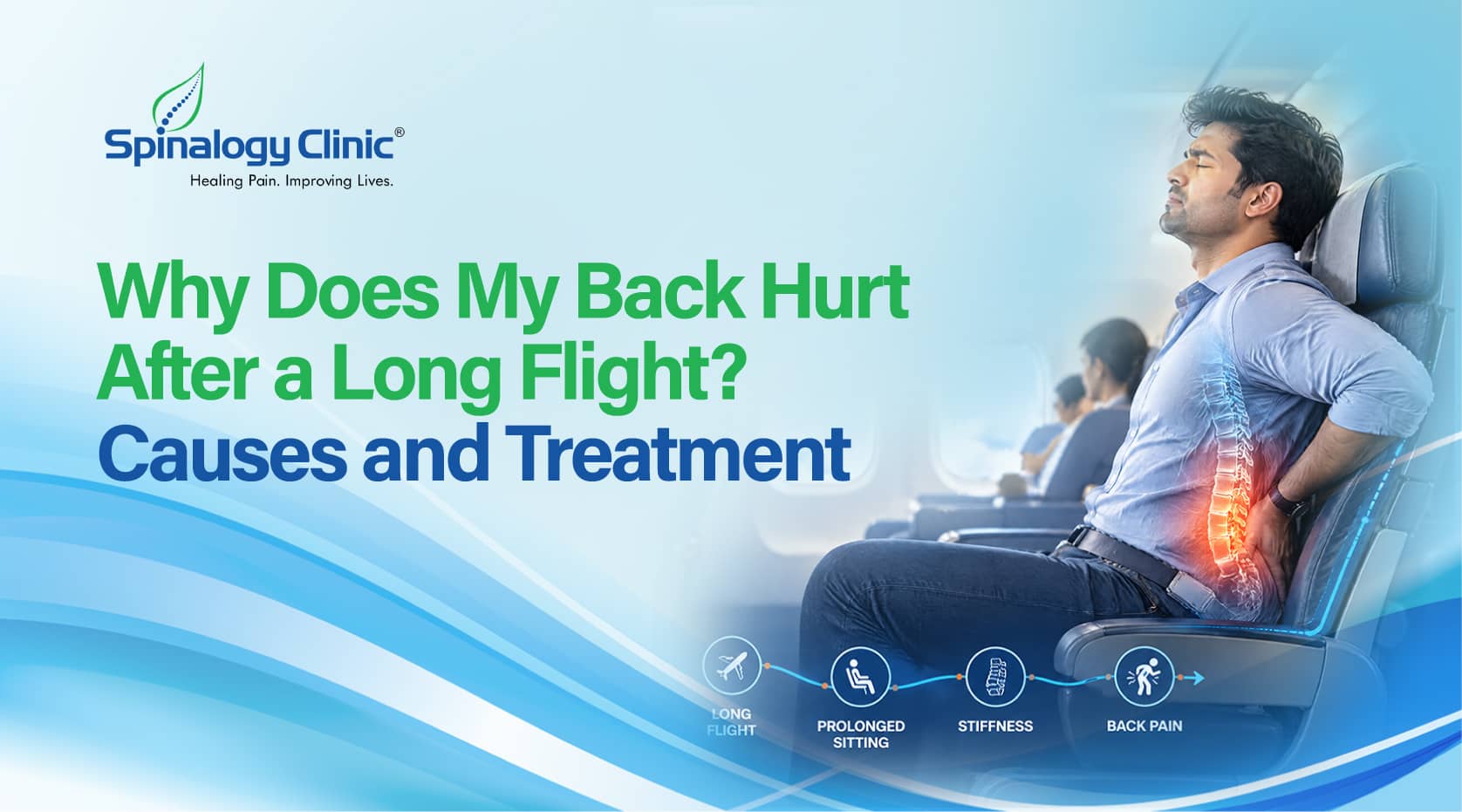
Why Does My Back Hurt After a Long Flight? Causes and Treatment
You get off the plane, collect your bags, and everything seems fine. Then somewhere between the airport and your front door, your lower back starts to feel stiff, heavy, or just plain uncomfortable. By the time you sit down at home, it's hard to find a position that feels right. If this sounds familiar, you're not imagining it. Back pain after a long flight is one of the most common complaints travellers bring to back and spine specialists, and there's a very real reason behind it.
Hours of sitting in the same position, limited legroom, an awkward nap against the window, hauling cabin luggage through the terminal: your spine goes through more than you'd expect during a "restful" flight. Let's talk about why this happens and what you can actually do about it.
Why Does My Back Hurt After a Long Flight?
Your back hurts after a long flight mainly because your spine and surrounding muscles aren't designed to stay locked in one position for hours. Sitting puts more pressure on your lower spine than standing or walking, and airline seats rarely offer the support your back actually needs.
A few things stack up during a flight. You're sitting with minimal movement, often in a slightly slouched or twisted position because of limited space. Your hip flexors and hamstrings stay shortened for hours, which pulls on your lower back once you finally stand up. If you dozed off leaning against a window or tray table, your neck and upper back may have held an awkward angle for a long stretch too. Add in the effort of lifting a heavy cabin bag into the overhead compartment, poor core strength and you have a perfect setup for back pain from sitting too long.
If you already have some underlying stiffness or a minor spine issue, back pain after flying can bring it to the surface simply because prolonged immobility doesn't give your body a chance to reset. This kind of back pain after travelling is extremely common and usually not a sign of anything serious on its own.
Is Lower Back Pain After Flying Normal?
Mild stiffness or muscular soreness after a long flight is common and usually settles down within a day or two as you move around normally again. It's your body's response to prolonged sitting, not a signal that something is wrong.
That said, not every ache after a flight is harmless. You may want to get checked if the pain is severe or getting worse instead of better, if it lasts more than a few days, or if it travels down one leg. Numbness, tingling, or noticeable leg weakness are also worth paying attention to, as is any difficulty walking or standing normally. Loss of bladder or bowel control is a medical emergency and needs immediate attention. And if your back pain followed a fall or injury rather than just sitting, don't assume the flight alone explains it. These symptoms deserve a proper evaluation rather than being brushed off as travel fatigue.
How Can I Relieve Back Pain After Flying?
The most effective first step for how to relieve back pain after flying is gentle movement. Walking at a comfortable pace helps loosen tight muscles and improves blood flow to the area far more than resting flat on a bed right after you land.
Avoid dropping straight onto a couch for hours the moment you get home; a short walk first often helps more. Gentle stretching, particularly for your hips and lower back, can ease tightness, and a warm compress may help if the discomfort feels muscular rather than sharp. Try to keep a comfortable, supported posture when you do sit down again, and skip any heavy lifting for a day or two. There's no single fix that works for everyone here. What helps depends on what's actually causing your pain, which is why persistent discomfort is worth having looked at rather than guessed at.
How Can I Prevent Back Pain on Long Flights?
You may have noticed that the passengers who feel fine after a long-haul flight are usually the ones who moved the most. For how to prevent back pain on long flights, small habits during the journey matter more than anything you do afterward.
Try to change position every hour or so, even if it's just shifting your weight or adjusting how you're sitting. When it's safe to do so, get up and walk the aisle for a couple of minutes. A small cushion or rolled-up blanket behind your lower back can offset the lack of lumbar support in most seats, and keeping your feet flat on the floor or a footrest helps too. Be mindful when lifting your bag into the overhead bin, twisting under load is one of the easiest ways to strain your back. None of this needs special equipment, just a bit of awareness during the flight.
When Should You See a Back Pain Specialist?
If your back pain after flying doesn't ease up within a few days, or keeps coming back on future trips, it may point to something beyond simple stiffness. Muscle strain is the most common culprit, but recurring pain can also come from disc-related issues, sciatica, facet joint irritation, or posture-related strain that prolonged sitting has aggravated. An existing spine condition can also flare up after hours of immobility.
None of this means jumping to conclusions about what's wrong. It simply means that ongoing or unusual symptoms deserve a proper look rather than repeated guessing.
Non-Surgical Treatment for Back Pain
The right approach to non-surgical back pain treatment always depends on what's actually causing the pain and how severe it is. There isn't one universal solution, and surgery is rarely the first step.
Depending on your evaluation, appropriate options may include:
- Physiotherapy to loosen tight muscles and get normal movement back into your spine
- Working on your posture so you're not putting the same strain on your back every day without realising it
- A few targeted exercises for the exact spot that's giving you trouble, not a generic routine
- Easing off certain activities for a bit while things settle down, rather than pushing through
- Pain management in the short term, just enough to let you move and recover comfortably
- Ergonomic changes, like how you sleep or how your desk is set up, that quietly take pressure off your back
- A guided recovery plan, which for a lot of people is genuinely enough to sort things out without ever needing surgery
At Spinalogy Clinic in Pune, our patients get a proper diagnostic evaluation first, so that non-surgical back pain treatment is planned around their actual symptoms and underlying condition rather than a generic treatment
Take Care of Your Back While Travelling
A stiff back after a long flight is usually just your body's way of telling you it spent too many hours in one position, and it often eases on its own with a bit of movement. But if the discomfort lingers, worsens, or keeps showing up every time you travel, it's worth getting it looked at rather than putting it down to "just the flight" each time.
If you're dealing with recurring or persistent back pain, Spinalogy Clinic in Pune offers thorough evaluation and non-surgical back pain treatment tailored to your specific condition, so you can travel (and simply move through your day) without dreading what your back will feel like afterward. Feel free to get in touch with our back pain specialists and start non-surgical back pain treatment in Pune.