How Does Your Muscle Mass Affect Bone Health?
Most people visit us with a sore back, a stiff knee or a hip that aches on the stairs. Hardly anyone says, "I think my muscles are weak." Yet when we assess them, weak muscles are very often a big part of the picture.
Many people see muscle as something for the gym, a way to look fitter or lose weight. But muscles have another job that rarely gets talked about: they look after your bones. So how does muscle mass affect bone health? At Spinalogy Clinic in Pune, it is something we explain to patients every day, so let us walk you through it the way we would in a consultation.
How Are Muscles and Bones Connected?
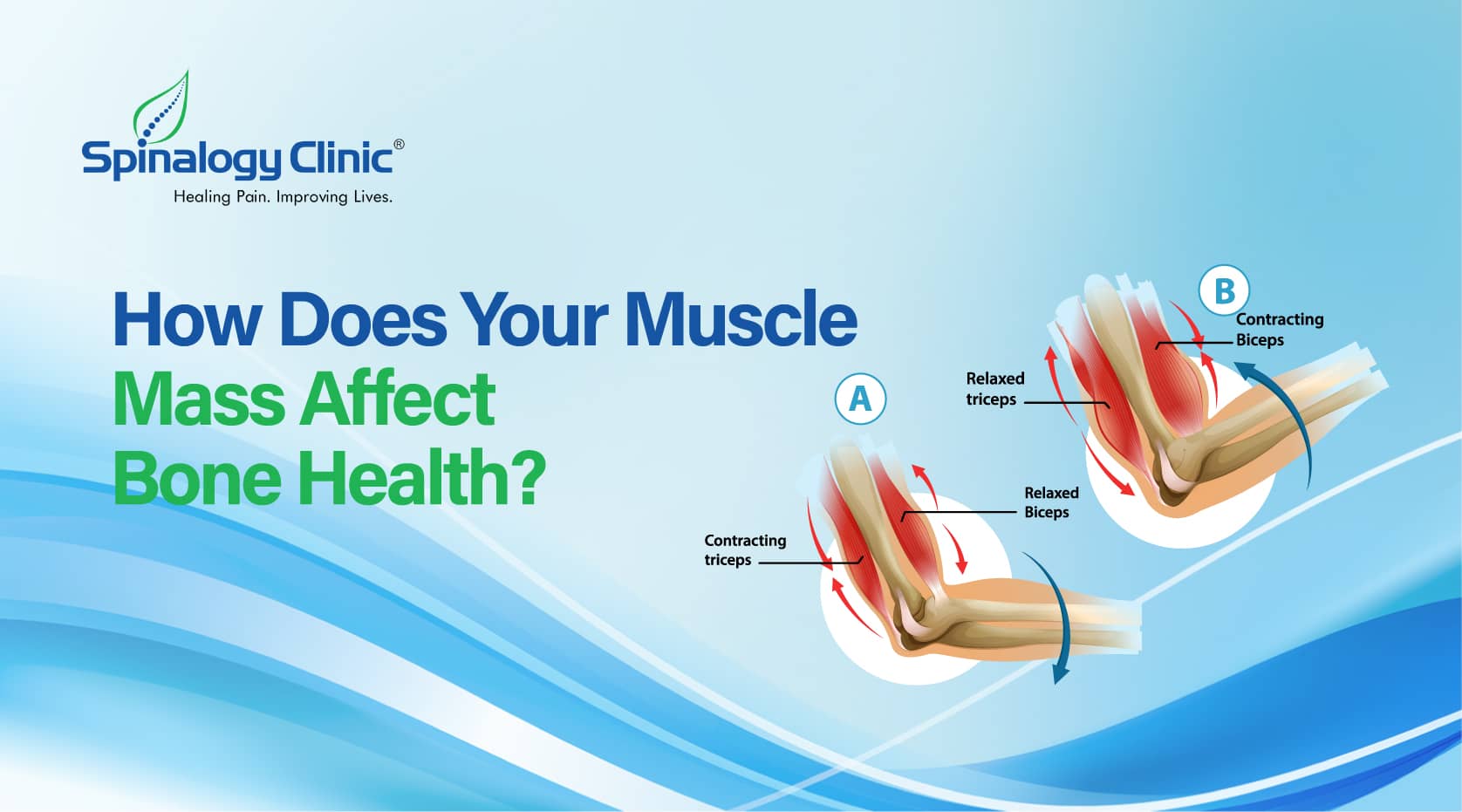
Muscles are attached to bones by tendons, and every time a muscle contracts, it pulls on the bone to move it. Think of your skeleton as the poles of a tent and your muscles as the ropes holding it steady. Loosen the ropes and the whole structure starts to wobble. Walking, climbing stairs, carrying a shopping bag and getting up from a chair all make your muscles tug on your bones. Bone is living tissue. When it is loaded regularly, through weight-bearing and resistance activity, it responds by staying stronger. When it is not loaded, it has little reason to.
How Does Muscle Mass Affect Bone Density?
Bone density is a measure of how much mineral your bones contain. People with healthy muscle mass and good strength tend to have better bone density, because strong muscles allow more movement and place more useful load on bones.
So, does having more muscle make your bones stronger? Not on its own. Age, genetics, hormones, nutrition, lifestyle and medical conditions all play a part, and muscle cannot guarantee protection against osteoporosis or fractures. What it does is give your bones better support and a better chance.
What Happens to Muscles and Bones as We Age?
Muscle mass and strength decline gradually with age, and bone density can fall as well.
From around the age of 40, the body slowly loses muscle. This is called age-related muscle loss, or sarcopenia, which simply means muscles shrink and weaken more than they should. Researchers are still studying how sarcopenia and bone health influence each other, but the pattern makes sense. Weaker muscles mean less pull on the bone, and often less movement overall.
At Spinalogy Clinic, we see this in patients with long desk hours, those who stopped exercising after an injury, and many who simply got busy. This is why bone and muscle health after 40 deserves attention. The good news is that muscles can respond to training at almost any age and healthy muscle recovery is possible.
Can Strong Muscles Help Prevent Falls?
Strong muscles improve balance and reaction speed, which can reduce the risk of falling. They cannot remove that risk completely. Picture stepping onto an uneven road and your foot slips. Your hips and thighs have a split second to correct you. That is muscle strength at work.
When these muscles are weak, the correction comes late or not at all. For older adults a fall can mean a fracture, so keeping the legs and hips strong is a practical way to move with more confidence.
Does Muscle Strength Support Joint Health?
Yes. Muscles around a joint share the load and keep it steady while you move.
Take the knee. Strong thigh muscles absorb part of the impact every time your foot lands. When they are weak, the joint takes more of that stress. Posture works the same way- tired back and core muscles let you slump, and your spine and hips carry weight differently.
That is why muscle strength and joint health are closely linked, and why caring for bones and joint health means looking at the muscles around both.
Signs Your Muscle Health May Need Attention
You might notice these in everyday life:
- Getting out of a chair is harder than before
- Stairs tire you quickly
- You walk less or more slowly
- Carrying everyday items feels heavy
- Your balance feels off, or you have had falls or near-falls
- You avoid activities because of pain or weakness
These signs do not point to one specific condition. If they continue, a doctor consultation is the sensible next step.
Which Muscles Matter Most?
You do not need a bodybuilder's physique. Four areas do most of the daily work:
- Legs: walking, standing up, climbing stairs
- Hips: balance and steady steps
- Core: posture and trunk support
- Back: lifting, bending, carrying
The best exercise for bone health mixes weight-bearing activity, resistance work and balance practice.
So what can you do about it?
- Brisk walking, stair climbing or dancing
- Strength training for bone health, using light weights, resistance bands or body weight
- Balance work, such as standing on one leg beside a counter
- Gentle mobility exercises
- Short breaks from sitting, at least once an hour
Protein supports muscle, and calcium and vitamin D are part of a balanced diet for bones. Your doctor can tell you what suits you.
Exercise does not have to mean heavy lifting. What is right for you depends on your age, fitness, injuries, pain and any bone or joint condition. Someone with osteoporosis, for instance, needs a very different plan from someone without it, which is why we assess each person first.
Make Your Muscle Health Strong
At the end of the day, looking after your muscles is not just about appearance. Healthy muscles support your bones, steady your joints and help you stay active for years. Keep moving, add some strength work to your week, and notice any change in how strong or steady you feel.
If pain, stiffness, weakness or poor balance is holding you back, come and talk to us.
At Spinalogy Clinic in Pune, we begin by understanding your strength, mobility, posture and movement patterns. From there, we build a personalised exercise and rehabilitation programme around your pain, medical history and goals. This can include physiotherapy for muscle weakness, strength and mobility work, and non-surgical pain management. Results differ from person to person, and our aim is steady, safe progress.
If you are looking for physiotherapy for muscle and bone health in Pune, we would love to help you get moving again with the same strength!